
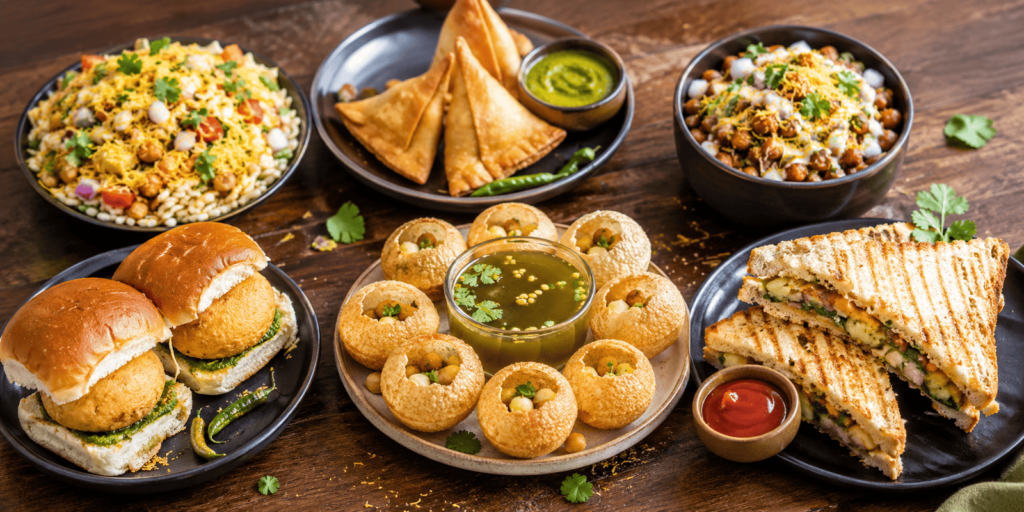
Indian street food is one of the most loved food cultures in the entire world, and the numbers prove it. The Indian food market is valued at over $50 billion, and a huge part of that love comes from the streets, where small carts, busy corners, and smoky grills feed millions of people every single day. Street food in India is not just about quick bites. It carries decades of regional tradition, local spices, and cooking techniques that have been passed down through generations.
The good news for food lovers living in the USA is that Indian street food recipes are far more doable at home than most people think.
People in the USA now have easy access to almost every ingredient needed to cook authentic Indian street food at home. Items like cumin, coriander, tamarind, and chickpea flour are available at Indian grocery stores and mainstream supermarkets like Whole Foods and Walmart.
The distance between a Mumbai street cart and an American kitchen has genuinely closed over the last decade.
What makes Indian street food so special is how each dish belongs to a specific region and carries its own identity. Pani Puri tastes different in Delhi than it does in Mumbai. Vada Pav is a Maharashtra staple, while Kathi Rolls belong to Kolkata. If you would rather skip the cooking altogether, you can always enjoy these must-try Indian street food dishes at Indian Flavors USA. Each of these dishes has a unique flavor profile that is worth exploring, and the recipes ahead cover all of that in a simple and practical way.
Cooking Indian street food at home in the USA starts with having the right pantry. Most of these ingredients are available online or at nearby stores, and once you have them stocked, making any dish on this list becomes much easier.
Most of these items are available at Indian grocery stores, which exist in almost every major US city. For those without a nearby Indian store, they can order from online stores, as most famous stores carry most dry spices and pantry staples with fast delivery.
No chaat masala? Mix cumin powder, amchur, black salt, and a pinch of red chili powder.
No tamarind paste? Use a small amount of lime juice mixed with a pinch of brown sugar.
No black salt (kala namak)? Regular sea salt works, but the unique sulfuric flavor will be missing.
No chickpea flour? All-purpose flour works for some recipes, though the texture will differ slightly.
The recipes below cover the length and breadth of India. Every dish has been written with the home cook in mind, using ingredients that are accessible across the USA and steps that do not require any special equipment.
Pani Puri is arguably the most iconic street food across India. Known as Golgappa in Delhi and Puchka in Kolkata, this dish consists of small crispy hollow balls filled with spiced water, mashed potatoes, and chickpeas.
Every region has its own version of the filling and the flavored water, making it one of the most debated and beloved street foods in the country.
Why Americans Love It?
The combination of crunch, cold spicy water, and tangy filling creates a flavor experience that is completely new for most American palates. Food bloggers and YouTube creators have made Pani Puri videos that regularly cross millions of views, introducing this dish to audiences who had never heard of it before.
Key Ingredients:
Recipe Steps:
Serving:
Always serve Pani Puri immediately after filling, or the shells will go soft. Keep the pani very cold by chilling it in the refrigerator for at least an hour before serving. Offer sweet tamarind chutney on the side for guests who prefer less spice.
Vada Pav is a Mumbai-born dish that was first made in the 1960s and quickly became the city’s unofficial food identity. A spiced potato fritter coated in chickpea batter and deep-fried is placed inside a soft bread roll with green chutney and dry garlic chutney. It is often called the Indian burger and has fed generations of Mumbaikars on their daily commute.
Why Americans Love It?
Americans already love the burger format, and Vada Pav delivers the same hand-held comfort with completely different and bold flavors. The garlic chutney in particular tends to be a favorite among first-time tasters.
Main Ingredients
Recipe Steps
Serving Tips:
Serve it with dry garlic chutney because it will enhance the taste if the dish. Do not skip it. Fried green chilies on the side are a traditional accompaniment that adds a smoky, spicy flavour to it.
The Kathi Roll was invented at Nizam’s restaurant in Kolkata in the early 1900s as a portable meal for busy workers. A paratha flatbread is wrapped around a filling of spiced meat or vegetables along with onions, green chutney, and a squeeze of lime.
Today, it is sold on street corners across India and has found a strong following in major US cities.
Why is it Famous in America?
Kathi Rolls feel familiar because they are essentially a wrap, a format Americans eat daily. The difference is in the spiced filling and the flaky paratha, which gives it a texture no regular tortilla can match.
Ingredients
Recipe Steps
Serving
Serve immediately while the paratha is still warm and slightly crispy. A sprinkle of chaat masala on the filling before rolling adds an extra layer of flavor.
Chole Bhature comes from the Punjab region of North India and is a breakfast and brunch staple that has traveled across the entire country. Spiced chickpea curry is served alongside deep-fried, fluffy bread called bhature.
The combination is hearty, filling, and packed with bold flavors that stay with you long after the meal.
Why It is Loved in Public?
The rich and tangy chickpea curry feels familiar to anyone who enjoys hummus or Middle Eastern food, but Chole takes it to a completely different level of depth and spice. The bhature with its airy puffed texture is also a crowd pleaser at first sight.
Key Ingredients
Recipe Steps
Serving Tips
The chole should have a thick gravy, not watery. Mash a few chickpeas while cooking to thicken the base naturally. Serve with a slice of raw onion and a wedge of lemon for the full authentic experience.
Masala Dosa is one of South India’s greatest gifts to the food world. A thin, crispy crepe made from fermented rice and lentil batter is filled with a spiced potato mixture and served alongside coconut chutney and sambar.
It originated in Karnataka and has since become a breakfast icon eaten across India and increasingly around the world.
Why Americans Love It?
Masala Dosa is naturally gluten-free, which makes it attractive to a growing segment of health-conscious American consumers. If you would rather have it made for you, Egg Dosa vs Masala Dosa breaks down which dosa might suit your taste best. The crispy texture and savory potato filling create a satisfying meal that feels both light and filling at the same time.
Key Ingredients
Recipe Steps
Serving Tips
The pan must be hot before pouring the batter, but not smoking. A cast-iron pan gives the best results for an authentic crispy edge. Serve immediately, as dosas lose their crunch quickly.
Bhel Puri is the classic Mumbai beach snack sold at Juhu and Chowpatty beaches for generations. Puffed rice is mixed with vegetables, chutneys, sev, and spices to create a light, tangy, and crunchy snack that takes barely five minutes to assemble.
The beauty of Bhel Puri is that it is different every time, depending on who makes it and how much of each chutney goes in.
Why Is It Loved by Everyone?
Bhel Puri is a healthy, no-cook snack that appeals to Americans looking for light bites with bold flavor. The puffed rice base gives it a popcorn-like accessibility, while the chutneys add a complexity that keeps people coming back.
Key Ingredients
Recipe Steps
Serving
Bhel Puri must be served and eaten immediately after mixing. Letting it sit makes the puffed rice soggy, and the entire texture is lost. Mix only what will be consumed right away.
Aloo Tikki is a spiced potato patty that is pan-fried or shallow-fried until golden and served with chutneys and sometimes topped with chickpea curry to become Aloo Tikki Chaat. It is a North Indian street food staple found at every chaat stall from Delhi to Lucknow and is one of the most recognized Indian snacks outside of India.
The Reason For Its Popularity
Aloo Tikki is essentially a spiced potato cake, and Americans already love hash browns and potato patties. The Indian spices take the concept to a new level, and the chaat toppings turn a simple patty into a full-flavored experience.
Ingredients:
Recipe Steps
Basic Tips
Do not make the patties too thick or the inside will remain soft while the outside burns. A medium thickness of about half an inch gives the best crispy outside and fully cooked inside.
The Samosa has a history that goes back over a thousand years and traces its roots to Central Asia before it became a defining part of Indian food culture.
Today, it is the most universally recognized Indian snack around the world. A triangular pastry shell is filled with spiced potatoes and peas, then deep-fried to a perfect golden crisp. Every region in India has its own variation in size, filling, and spice level. If you’re craving one without the prep, samosas are on the menu at Indian Flavors USA, ready to order any time.
Samosas are already widely available across the USA at Indian restaurants and even at some mainstream cafes and airports. Home cooking versions allow Americans to customize the filling and spice level. The crispy pastry and warm spiced filling also make Samosas a perfect party appetizer.
Ingredients for Making
Preparation Steps
Helpful Cooking Tips
The oil temperature matters greatly for Samosas. Too hot and the outside browns before the pastry cooks through. Medium heat and patient frying give the flaky and fully cooked result. Samosas can also be baked at 400°F for a lighter version.
Dabeli comes from the Kutch region of Gujarat and was created in the 1960s. The name means “pressed” in Gujarati, referring to how the stuffed bun is pressed on a hot griddle before serving. Spiced mashed potatoes mixed with a special dabeli masala are stuffed into a pav bun along with pomegranate seeds, roasted peanuts, and chutneys. The result is a sweet, spicy, and crunchy combination that is unlike any other street food.
Why Americans Love It
The sweet and spicy flavor combination in Dabeli is something Americans who enjoy Thai or Korean food tend to appreciate immediately. The pomegranate seeds and peanuts add texture layers that make every bite interesting.
Ingredients
Recipe Steps
Serving Tips
The pomegranate seeds are not optional in this recipe. They provide a fresh burst of sweetness that balances the spice and makes Dabeli taste authentic. If fresh pomegranate is not available, frozen pomegranate seeds work just as well.
Raj Kachori is the king of all chaats, which is exactly what its name suggests. It originated in Rajasthan and is essentially one large, crispy puffed shell filled with an impressive amount of toppings, including boiled chickpeas, potatoes, yogurt, chutneys, sev, pomegranate seeds, and sprouts. It is a complete meal on its own and is served at celebrations and festivals across North India.
Why it is a Favourite Dish?
Raj Kachori is visually stunning. The large golden shell overflowing with colorful toppings makes it highly shareable on social media, and food content creators across the USA have given it significant attention in recent years. The flavor combination covers every taste like sour, sweet, spicy, and savory all at once.
Key Ingredients
Recipe Steps
Serving Tips
Raj Kachori must be assembled and served immediately. The yogurt should be cold and slightly sweet to balance the spicy chutneys. Serve it in a deep plate or bowl since the filling tends to overflow.
Pav Bhaji was created in the 1850s in Mumbai as a quick meal for textile mill workers who needed something fast, filling, and affordable. A thick spiced vegetable mash cooked on a large iron griddle is served with buttered bread rolls toasted on the same griddle. Today, it is one of the most popular street foods across India and has found a strong place in Indian restaurants in the USA.
The Reason for its Popularity
Pav Bhaji is comfort food in the truest sense. The buttery bread and rich vegetable mash are deeply satisfying and familiar to American taste preferences. The visual of the butter melting over the orange bhaji on a sizzling griddle is also a big part of its appeal.
Key Ingredients
Preparation Method
Serving Tips
The more you mash and cook the bhaji, the better it tastes. Cooking it on a cast iron griddle gives the best smoky flavor. Adding an extra spoon of butter just before serving is what makes it taste exactly like the Mumbai street version.
Jalebi is one of India’s oldest and most loved sweets, with records of its existence going back over 500 years. A fermented batter is piped in spiral shapes into hot oil and fried until crispy, then immediately soaked in warm sugar syrup flavored with saffron and cardamom. Served hot, the outer layer is crunchy while the inside is filled with sweet syrup. If you’re in the mood for something sweet without the fermenting wait, browse the desserts on the menu at Indian Flavors USA. Jalebi is eaten as a breakfast sweet, a festival dessert, and a street snack at any hour of the day.
Why do people love it?
Jalebi sits at the intersection of a funnel cake and a glazed donut, both of which Americans already love. The saffron and cardamom in the syrup add an exotic flavor that makes it feel special and different from anything in the American dessert vocabulary.
Key Ingredients
Recipe Steps
Serving Tips
Jalebi must go from the syrup directly to the serving plate and be eaten within minutes. Cooled Jalebi loses its crunch and becomes sticky. Pair with a small cup of warm milk or rabri (thickened condensed milk) for the most traditional experience.
Indian street food has moved well beyond ethnic grocery stores and niche restaurants. It now sits comfortably on the menus of mainstream food festivals, popular food trucks, and home cooking blogs across the United States, including catering menus for events across the country. The reasons behind this growth are clear and backed by real numbers.
The Indian diaspora in the USA has crossed 4.4 million people, making it one of the fastest-growing immigrant communities in the country. This population naturally brought its food culture along, and over time, that culture spread to American neighbors, coworkers, and food lovers who had never visited India. Word of mouth, social media, and food delivery apps did the rest of the work.
Google search data shows that searches for Indian recipes have grown consistently over the last five years, with terms like “chaat recipe,” “samosa at home,” and “Indian street food” seeing significant spikes, especially after 2020, when home cooking became a daily habit for millions.
Food delivery platforms like DoorDash and Uber Eats also report that Indian cuisine ranks among the top five most ordered food categories in major US cities, including New York, Chicago, Houston, and San Francisco.
Indian food trucks have also played a big role in this shift. Cities like Los Angeles, Austin, and Seattle now have dedicated Indian street food trucks that serve pani puri, kathi rolls, and vada pav to long afternoon lines. This kind of visibility has made more Americans curious about recreating these flavors at home, and that curiosity is exactly what this blog is built around. For readers near Wylie, Texas, that same curiosity can be satisfied with a visit to Indian Flavors USA.
Indian street food has always belonged to the people who cook it, and that now includes your kitchen in the USA. The dishes covered here represent the best of what Indian streets have to offer, and every single one of them is achievable at home with simple ingredients and a little practice.
Start with one dish that excites you the most, stock your pantry with the basics, and let the flavors guide you from there. The more you cook these recipes, the more confident and creative you will get with the spices. And on the days you’d rather not cook, Indian Flavors USA’s menu is just a call or order away. That is exactly how great street food has always been made.
Have Questions? We’ve Got Answers!
Yes. Most ingredients like cumin, tamarind, chickpea flour, and chaat masala are available at Indian grocery stores or online. Many mainstream stores also carry basic Indian spices.
Most of them are. Dishes like Bhel Puri, Aloo Tikki, and Pav Bhaji are very simple to make at home and require no special cooking skills. A few dishes like Jalebi and Masala Dosa need a little practice but are absolutely doable.
Absolutely. Every recipe can be adjusted by reducing the amount of red chili powder and green chilies. The core flavors of the dish remain intact even with a milder spice level.
Pav Bhaji or Aloo Tikki are the best starting points. Both use simple ingredients, require minimal technique, and deliver bold flavors that make the effort feel very rewarding.
Several Indian street food dishes are quite nutritious. Dishes like Masala Dosa, Bhel Puri, and Kathi Rolls are made with vegetables, lentils, and whole grains. For a closer look at how plant-based eating fits into Indian cuisine, see this guide on the benefits of eating vegan food. Fried options like Samosa and Vada Pav can be enjoyed in moderation as part of a balanced diet.