
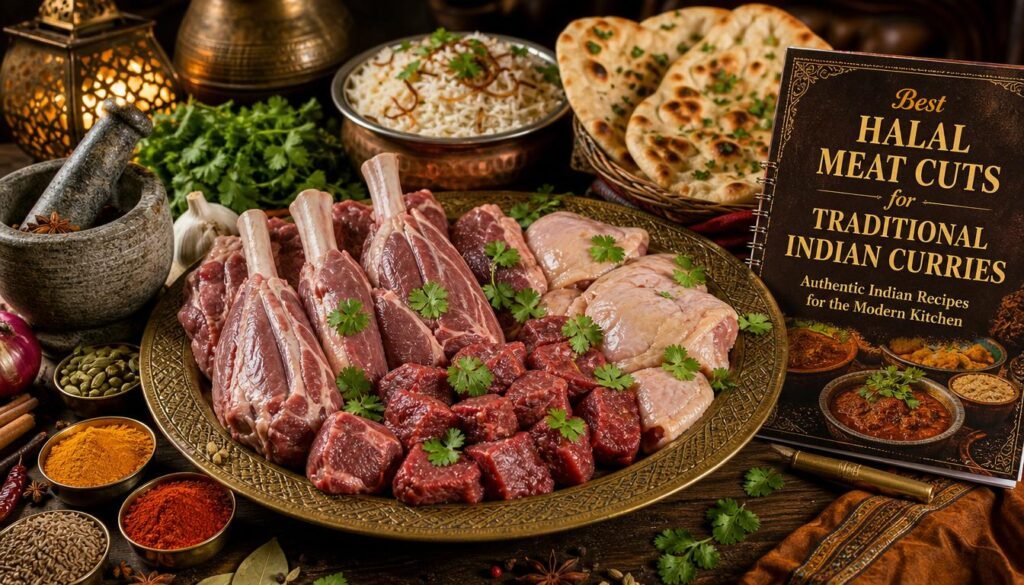
Preparing authentic traditional Indian curries requires more than just the right spices and technique; it demands the perfect cut of halal meat. Whether you’re a home cook looking to elevate your curry game or a restaurant chef seeking to perfect your recipes, understanding which halal meat cuts work best for different curry preparations is essential. In this comprehensive guide, we’ll explore the best halal meat cuts for traditional Indian curries, helping you achieve restaurant-quality results in your own kitchen.
Halal meat has become increasingly popular among home cooks and professional chefs preparing Indian curries, both for religious considerations and for its superior quality standards. Halal meat is processed according to Islamic dietary laws, which involve specific slaughtering practices that many believe result in better meat quality, tenderness, and flavor retention.
When selecting halal meat cuts for Indian curries, you’re not just making a dietary choice you’re investing in the quality and authenticity of your dish. Traditional Indian curries have been perfected over centuries, and using properly sourced, high-quality halal meat cuts ensures that each bite delivers the authentic taste your dish deserves.
The best halal meat cuts for Indian curries vary depending on the style of curry you’re preparing. Different cuts have different fat content, texture, and cooking requirements, which directly impact how your final dish tastes and feels.
When it comes to chicken-based Indian curries, thighs and drumsticks are the gold standard. These halal meat cuts contain more fat and connective tissue than chicken breasts, which means they remain incredibly moist and flavorful throughout the extended cooking process required for traditional curries.
Bone-in, skin-on chicken thighs are particularly excellent for authentic Indian curry preparations. They absorb the spices beautifully and release their natural juices into the curry sauce, creating a rich, deeply flavored gravy. Whether you’re making butter chicken, chicken tikka masala, or a traditional chicken chettinad, bone-in chicken thighs will elevate your results significantly.
For traditional recipes like chicken dopiaza or chicken jalfrezi, purchasing whole halal chickens and cutting them yourself provides superior flavor. The bones and skin contribute to the overall complexity of the curry sauce, while the variety of meat sizes ensures different textures in every spoonful.
Goat meat is the preferred choice for many traditional Indian curries, particularly in South Indian cuisine. The meat has a deeper flavor profile than lamb and holds up exceptionally well to extended cooking times. For halal meat cuts, look for:
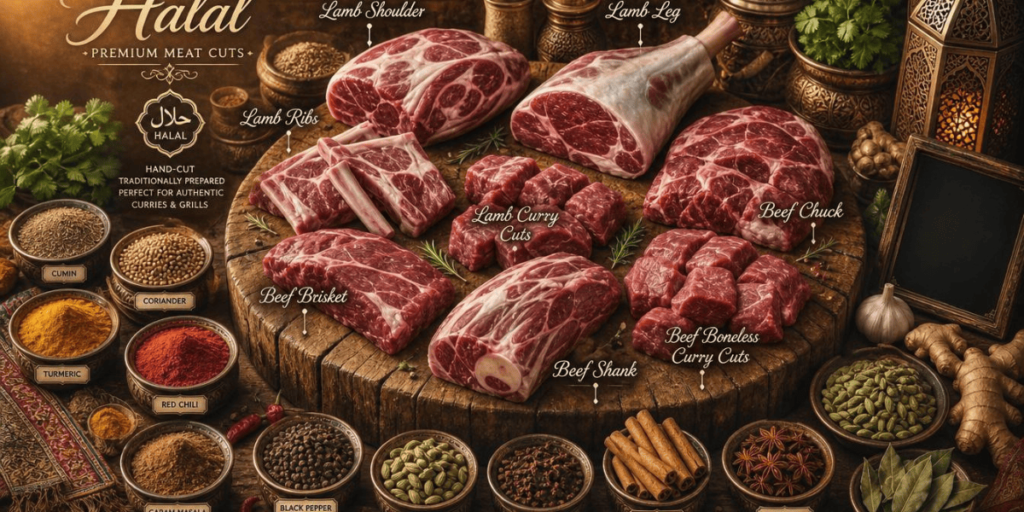
Lamb shoulder is one of the best halal meat cuts for Indian curries, particularly for North Indian preparations. The higher fat content ensures the meat stays tender and succulent even after hours of simmering. Lamb neck, often overlooked, is exceptional for curries where you want gelatinous richness in the sauce.
Chunks of 2-3 inches work best for traditional curries, allowing enough cooking time for complete tenderization while maintaining a satisfying texture.
For beef-based Indian curries like Nihari or Paya, beef chuck and brisket are the premier halal meat cuts. Both contain significant marbling and connective tissue that converts to collagen during slow cooking, creating the luxurious, unctuous sauce that characterizes authentic beef curries.
Beef shank, with its high collagen content, is perfect for curries where you want an intensely flavored, thick gravy. Labeled “beef stew meat” is typically sourced from chuck or round, making it a versatile option for various Indian curry styles.
Traditional Indian curries sometimes incorporate halal offal like liver, kidney, and tripe. These cuts require careful preparation and specific cooking techniques but add authentic depth to specialized curries like kaleji masala or paya curry.
For fish curries, look for firm-fleshed varieties suitable for halal sourcing. Halibut, kingfish, and other white fish are excellent choices. For seafood curries, prawns and squid are popular options that work beautifully in coconut-based gravies.
When purchasing halal meat cuts for Indian curries, visit a butcher who specializes in halal preparation. Look for:
The size you cut your halal meat significantly impacts cooking time and final texture. For most traditional Indian curries, aim for:
Marinating is crucial for halal meat cuts in Indian curries. Yogurt-based marinades with ginger, garlic, and spices penetrate the meat, enhancing flavor and tenderness. Even 30 minutes of marinating can significantly improve your results.
Maintaining the right temperature is essential. Traditional Indian curries typically simmer at medium heat, allowing the meat to cook gradually while flavors meld. High heat can toughen halal meat cuts, while too-low heat extends cooking time unnecessarily.
Have Questions? We’ve Got Answers!
While boneless cuts work, bone-in halal meat cuts are superior for Indian curries. The bones add depth to the gravy and their marrow enriches the sauce. If using boneless cuts, add extra time for cooking and consider adding extra oil or ghee.
Chicken thighs typically need 30-40 minutes; goat and lamb require 1-1.5 hours; beef might need 2-3 hours depending on the size and your preferred tenderness level. Start checking at the lower time and adjust accordingly.
Halal meat is processed according to specific Islamic standards, which many claim results in better meat quality, more consistent tenderness, and improved flavor. The slaughtering method is believed to result in better blood drainage, affecting taste and texture.
Generally yes, but expect different results. If a recipe calls for lamb shoulder but you use chicken thighs, reduce cooking time significantly. The principle is to use cuts with similar fat content and cooking times for best results.
Specialty halal butchers, Indian grocery stores, and increasingly mainstream supermarkets offer halal meat. Ask your butcher for recommendations based on your specific curry recipe and cooking time.